Septic Tank Pumping in Amarillo
Septic tank pumping service across the Amarillo area. Learn the warning signs, how pumping works, and how local clay soil sets your schedule.
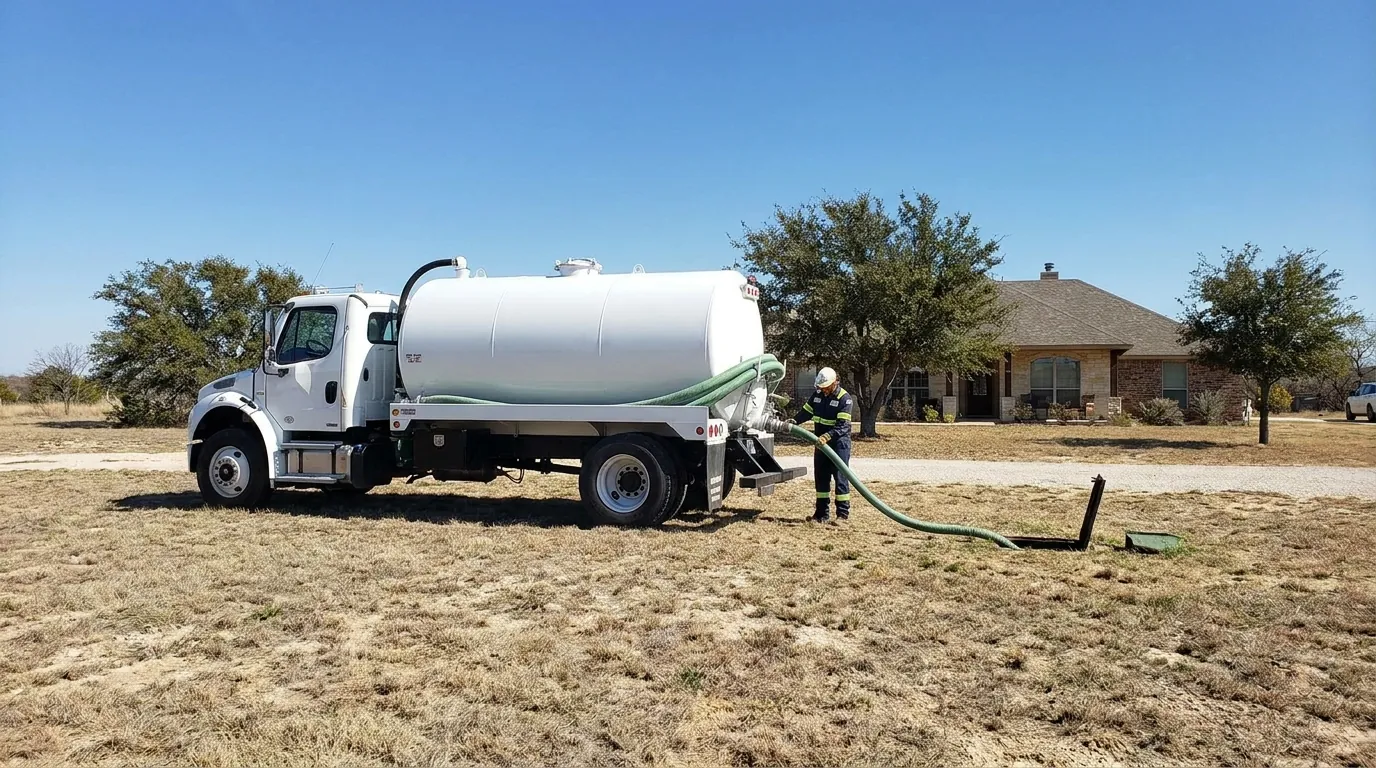
When a tank needs pumping
A septic tank works by letting solids settle to the bottom as sludge and grease float to the top as scum, while the clearer water in the middle flows out to the drain field. Over time the sludge and scum layers thicken. When they take up too much of the tank, solids start escaping toward the drain field, where they clog the soil and shorten the life of the whole system. Regular septic tank pumping removes those layers before that happens.
The warning signs are worth knowing. Slow drains throughout the house, gurgling toilets, sewage odors near the tank or drain field, unusually green and spongy grass over the buried lines, or a backup at the lowest drain in the home all point toward a tank that is full or a system under stress. In the Amarillo area, a sudden storm can push a marginal system over the edge, so problems often show up right after heavy rain.
This page covers routine septic tank pumping. If you also want the system checked for damage or you are buying or selling a home, pair pumping with a septic system inspection. If the tank walls and outlet need a full wash-down, see septic tank cleaning.
What septic tank pumping involves
A straightforward pumping visit follows the same basic steps, whether the tank is on a routine schedule or already backing up.
-
Locate and open the tank
We find the tank and access the lids or risers. On older Panhandle properties the lids are sometimes buried under a foot of soil, so locating them accurately is the first task and can affect the time on site.
-
Measure the sludge and scum
Before pumping we check how full the tank is and how thick the layers are. That reading tells us whether your current pumping interval is right for your household or whether it should be adjusted.
-
Pump the tank fully
The vacuum truck removes the liquid, floating scum, and settled sludge down to the bottom. Pumping the full tank — not just the liquid off the top — is what actually resets the system.
-
Check the baffles and outlet
With the tank empty we look at the inlet and outlet baffles and the condition of the walls. A missing outlet baffle lets scum flow straight to the drain field, and catching that during pumping can save a costly repair later.
Schedule septic tank pumping
Whether you are on a routine schedule or noticing slow drains, we serve Amarillo and nearby towns for septic tank pumping.
Call to describe what you are seeing and set up a visit.
Frequently asked questions
How often should a septic tank be pumped near Amarillo?
Most households do well on a three-to-five-year cycle, but it depends on tank size and how many people use the system. Homes with heavy water use or a garbage disposal often need pumping closer to every two or three years.
Does the whole tank need to be pumped or just the liquid?
The full tank should be pumped, including the settled sludge at the bottom. Removing only the liquid leaves the solids behind, and they are the layer that damages the drain field.
What affects septic tank pumping cost?
Tank size, how full it is, how easy the lids are to reach, and how far the truck has to travel all factor in. A tank that is badly overdue or has buried lids takes longer and costs more than a routine visit.
Can heavy rain make my tank seem full?
Yes. When the ground around the drain field is saturated, water backs up into the tank and the system drains slowly, which can mimic a full tank. That is common in the Amarillo area after sudden storms on clay soil.