Grease Trap Pumping in Amarillo
Grease trap pumping for Amarillo-area kitchens and food businesses. Learn how traps fill, the warning signs, and a sensible service schedule.
Why grease traps need service
A grease trap catches fats, oils, and grease before they reach your drains and, on a septic property, before they reach the tank and drain field. Grease that gets past the trap floats in the tank, thickens the scum layer, and can flow out to coat and clog the soil in the drain field — one of the fastest ways to shorten a system's life. Regular grease trap pumping keeps that from happening.
The signs a trap is overdue are hard to miss: slow kitchen drains, foul odors near the trap, and grease showing up where it should not. For any kitchen that produces steady grease, a trap that is left too long will eventually push that load downstream. On septic properties around Amarillo, that downstream damage lands squarely on the tank and field.
Grease trap service protects the same system as septic tank pumping, and when a neglected trap has already sent grease into the tank, a septic tank cleaning is often the follow-up that clears it out.
What grease trap pumping involves
Servicing a grease trap is about fully emptying it and confirming it will keep doing its job.
-
Open and assess the trap
We open the trap and check how full it is and how thick the grease cap has grown, which tells us whether the service interval is right.
-
Pump out the contents
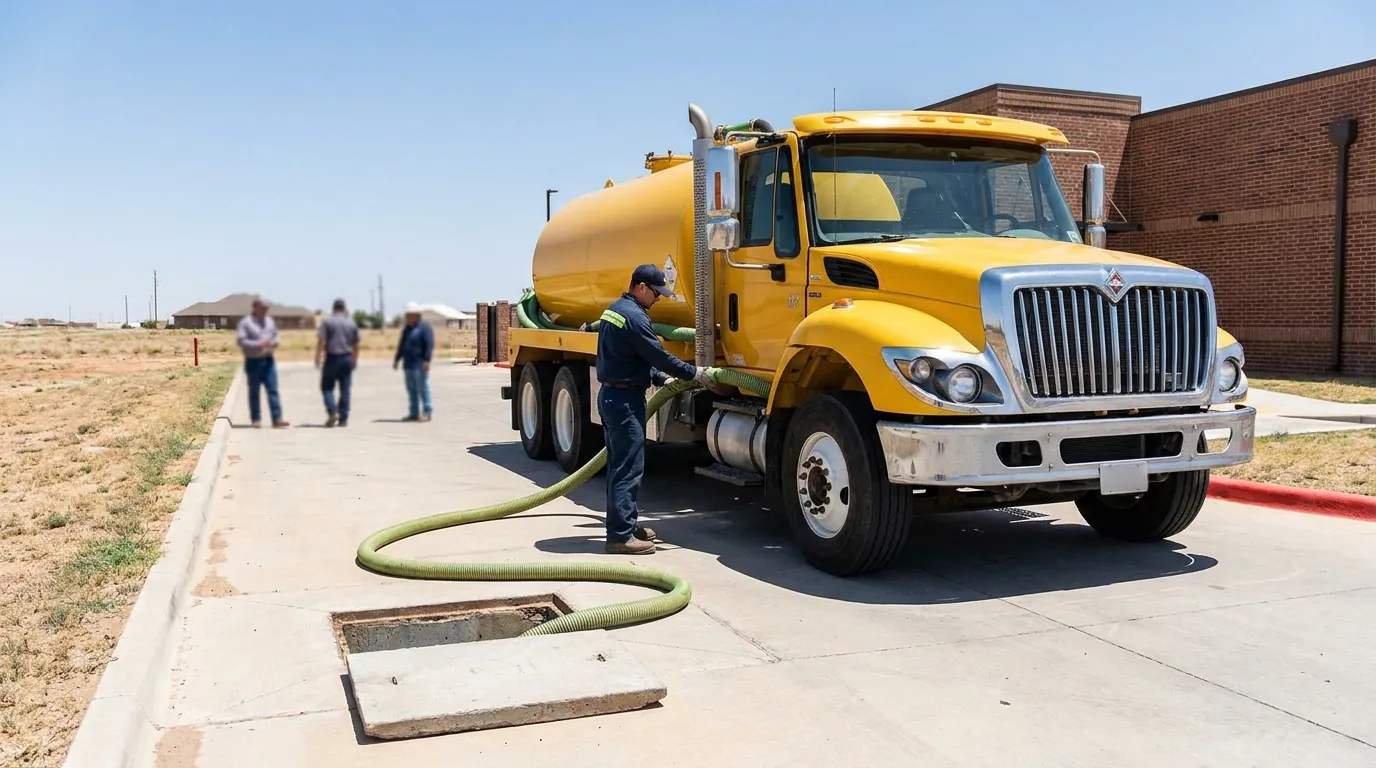
The accumulated grease, solids, and water are removed with the vacuum truck so the trap can capture grease again instead of passing it through.
-
Scrape and check the trap
We remove hardened grease from the walls and baffles and check that the trap's parts are intact and working.
-
Advise on schedule
Based on how full the trap was, we suggest a service interval that keeps grease from ever reaching the septic system.
Schedule grease trap pumping
Slow kitchen drains or odors near the trap mean it is time. We serve kitchens and food businesses across the Amarillo area.
Call to set up service and discuss a schedule that fits your kitchen.
Frequently asked questions
How often should a grease trap be pumped?
It depends on the trap's size and how much grease the kitchen produces. Busy kitchens often need service monthly or quarterly, while lighter use can go longer — the fill level at each visit is the best guide.
What happens if a grease trap is not pumped?
Grease overflows the trap, clogs drains, and on a septic property flows into the tank and drain field. That grease coats the soil and can lead to a costly drain field failure.
Does grease really damage a septic system?
Yes. Grease that reaches the tank thickens the scum layer and can pass to the drain field, where it clogs the soil the system depends on. Keeping grease out of the tank is one of the best ways to protect it.
Do you handle the paperwork many kitchens are required to keep?
We provide a service record of each pump-out so you have documentation of when the trap was emptied. Ask about a record for your files when you schedule.