Drain Field Service in Amarillo
Drain field service in the Amarillo area. Spot a failing leach field early and understand how clay soil and heavy rain affect it.
The most expensive part to lose
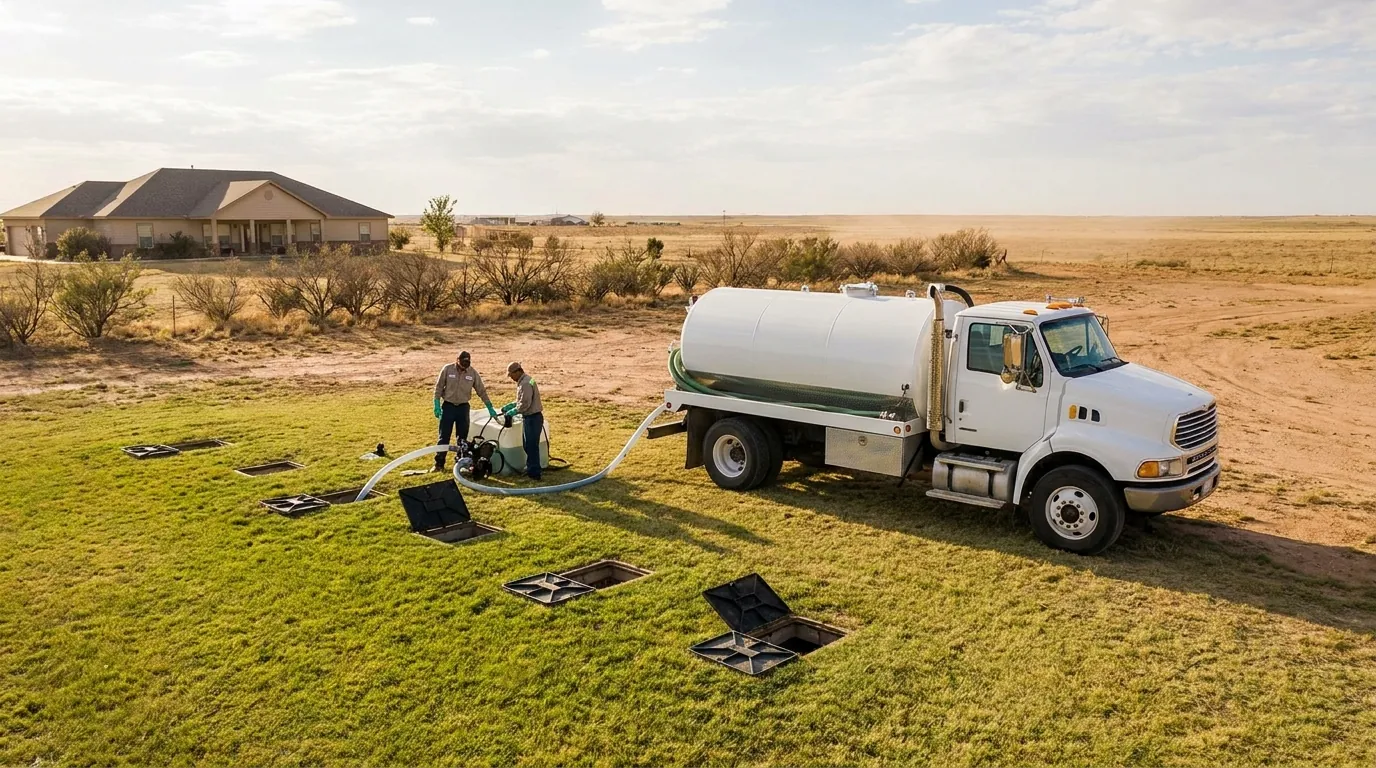
The drain field, or leach field, is where wastewater from the tank soaks into the soil and finishes treating. It is the most expensive part of a septic system to replace, and it fails quietly — usually because solids escaped a neglected tank and clogged the soil, or because the ground stayed saturated too long to accept more water.
Warning signs include soggy or unusually green grass over the field, standing water or sewage smell in that area, and drains that stay slow even after the tank has been pumped. In the Amarillo area, expansive clay drains slowly to begin with, and after a sudden storm the field can stay waterlogged for days, so timing matters when you judge whether a field is truly failing.
Because most drain field trouble starts in the tank, this service works hand in hand with septic tank pumping and a septic system inspection to confirm where the problem actually lies before any work is done.
What drain field service involves
The first goal is always to confirm the field is the real problem, then to relieve the strain on it.
-
Confirm the tank is not the cause
We check and pump the tank first. A field that seems failed will often recover once solids stop reaching it, so ruling out the tank comes first.
-
Evaluate the field
We look at drainage, odor, standing water, and how recent weather fits the picture. Amarillo's clay and recent storms are weighed before calling a field failed.
-
Relieve and protect the field
We advise on reducing water load, keeping traffic and heavy equipment off the field, and correcting drainage that sends surface runoff over the lines.
-
Plan next steps
If the soil is truly clogged, we explain the realistic options so you can plan the work rather than face a surprise.
Get your drain field checked
Soggy ground or slow drains after pumping are worth a look before the field gets worse. We serve Amarillo and the surrounding towns.
Call to describe what you are seeing over the field.
Frequently asked questions
What causes a drain field to fail?
The most common cause is solids escaping an overfull tank and clogging the soil. Chronic overloading with water and a saturated water table also keep the field from accepting flow.
Can pumping the tank fix a wet drain field?
Sometimes. If the field is struggling because solids are reaching it, stopping that flow with prompt pumping can let a marginal field recover. A field with fully clogged soil, however, needs more than pumping.
Why does my field stay wet after Amarillo storms?
Expansive clay soil drains slowly and holds water, so the field can stay saturated for days after a sudden storm. It is worth waiting for the ground to dry before deciding a field has failed.
How can I protect my drain field?
Keep vehicles and heavy equipment off it, avoid planting deep-rooted trees over the lines, spread out water use, and direct roof and surface runoff away from the field.